Description 
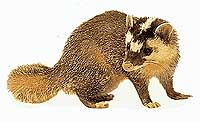
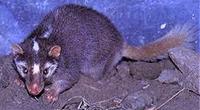
It is the smallest of the badger family, only reaching a weight of 2.5 lbs (1.1 kg) to 7 lbs. (3.1 kg). Their bodies reach a length of 13 inches (33 cm) to 17 inches (43 cm). They are also called tree badgers, or pahmi. Aside from the Burmese and Chinese ferret badger there is Everett's ferret badger Melogale everetti, which is only found on Mount Kinabalu at the northern tip of the island of Borneo.
Reproduction
Cubs can be born year round, but the average season is in late spring, usually in May or June until late fall, around September and October.. The average litter size is two to three babies. Ferret badgers are born in burrows and fed by the mother for two to three months.
Habits
Like other members of the badger family, the Ferret badgers is an omnivore, its diet consists of small rodents, insects and occasionally fruit. It is almost completely nocturnal. Most other badgers burrow their own homes, but the ferret badger is known to inhabit burrows made by other animals. They have also been seen sleeping the tree branches. The Burmese ferret badger is more of a social creature than it's Chinese counterpart. They are encouraged by the Burmese to enter their homes to get rid of insects and rodents.
General
The honey badger's anal glands secrete a vile-smelling liquid to deter its enemies, whereas ferret badgers, the teledu and the Palawan stink badger will squirt the contents of their anal glands into the face of an attacker. The ferret badger is one of only 13 species in the China - Anhui Province, that is under state protectionand was put on the IUCN Red List of Threatened Animals in 1996.There are only 8 of these animals listed in zoo’s around the world. The life span is recorded at over 10 years.
|